Blackjack Basic Strategy Explained
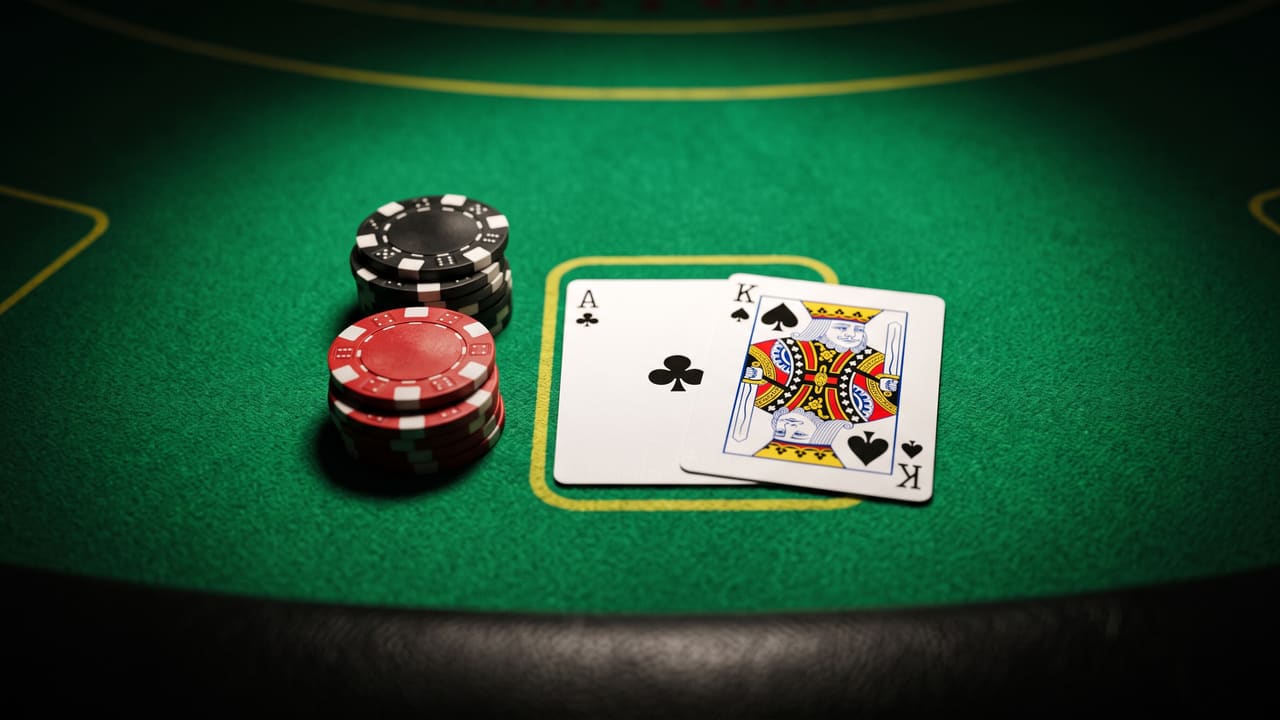
Basic strategy is the mathematically optimal play for every possible hand in blackjack, based on your two cards and the dealer’s upcard. It doesn’t guarantee you’ll win any individual hand — nothing can — but it minimizes the house edge to its lowest possible level for a given set of rules, typically around 0.5%.
Written and fact-checked by the Gamblingcore editorial team. We keep this content independent of any single operator’s marketing claims — see our disclosure policy for how the site is funded.
Why Basic Strategy Works
Every blackjack decision — hit, stand, double, split, or surrender — has a mathematically correct answer based on probability, because the deck’s composition and the dealer’s fixed rules (must hit below 17, must stand on 17 or higher) never change. Basic strategy is simply the result of that math having already been worked out, hand by hand, through exhaustive computer simulation decades ago. Following it isn’t a guess or a “system” — it’s playing the odds that already exist in the game.
The chart below assumes the most common online ruleset: 4–8 decks, dealer stands on soft 17. Rule variations (dealer hits soft 17, doubling restrictions, surrender availability, number of decks) shift a small number of specific decisions — always check a game’s rules screen for its exact ruleset before assuming this chart is 100% precise for it, though it will be correct or very close to correct in the overwhelming majority of cases.
Hard Totals
A “hard” total is any hand without an Ace, or with an Ace counted as 1 (because counting it as 11 would bust).
| Your hand | Dealer 2–6 | Dealer 7–A |
|---|---|---|
| 8 or less | Hit | Hit |
| 9 | Double (else hit) | Hit |
| 10 | Double | Double vs. 7–9, hit vs. 10/A |
| 11 | Double | Double (hit vs. Ace at some tables) |
| 12 | Stand vs. 4–6, hit vs. 2–3 | Hit |
| 13–16 | Stand | Hit |
| 17+ | Stand | Stand |
The logic behind 12–16 against a dealer’s 2–6 is the single most important pattern to internalize: those dealer upcards are the ones most likely to force the dealer to bust, so you stand and let the dealer take the risk instead of busting yourself first.
Soft Totals
A “soft” total includes an Ace counted as 11 (e.g., Ace + 6 = “soft 17”), which means you can’t bust by taking one more card.
| Your hand | Action |
|---|---|
| Soft 13–14 (A,2 / A,3) | Double vs. 5–6, else hit |
| Soft 15–16 (A,4 / A,5) | Double vs. 4–6, else hit |
| Soft 17 (A,6) | Double vs. 3–6, else hit |
| Soft 18 (A,7) | Double vs. 2–6, stand vs. 7–8, hit vs. 9/10/A |
| Soft 19+ | Stand |
Pairs
| Pair | Action |
|---|---|
| Aces | Always split |
| 8s | Always split |
| 10s (including any 10-value cards) | Never split — stand |
| 9s | Split vs. 2–6, 8–9; stand vs. 7, 10, A |
| 7s | Split vs. 2–7, else hit as a hard 14 |
| 6s | Split vs. 2–6, else hit |
| 5s | Never split — treat as a hard 10 (double or hit) |
| 4s | Split only vs. 5–6 (only if double-after-split is allowed); otherwise hit |
| 2s and 3s | Split vs. 2–7, else hit |
Splitting Aces and 8s is worth memorizing on its own even if nothing else sticks: Aces because two hands starting at 11 (soft) are far stronger than one hand of 12 (a “soft” 2, treated as hard 12), and 8s because a hard 16 is the single worst total in blackjack, while two hands starting at 8 are meaningfully better than staying on 16.
What Basic Strategy Cannot Do
Important limits
- Basic strategy reduces the house edge; it does not eliminate it or turn blackjack into a winning game over time.
- It applies to a single hand in isolation — it isn't a betting system, and pairing it with a progressive betting system like Martingale doesn't change the underlying math. See why the Martingale system fails.
- Online blackjack typically uses an RNG that reshuffles far more frequently than a physical shoe, which is one reason card counting — a separate, advanced technique — is far less viable online than at a physical table.
- The exact correct play can shift slightly depending on the specific game's number of decks and dealer rules — always check the rules screen for the exact game you're playing.
How Much Basic Strategy Actually Saves You
A player with no strategy at all — guessing or playing on instinct — typically faces a house edge of somewhere around 2–4%, depending on how badly they deviate from optimal play. Perfect basic strategy on a standard 4–8 deck, dealer-stands-on-soft-17 game brings that down to roughly 0.5%. That’s the difference between losing an average of $2–4 per $100 wagered and losing roughly $0.50 per $100 wagered over the long run — a large gap, though still a negative expectation game overall. For the underlying math on house edge and expected value, see our Strategy Center.
Frequently Asked Questions
- Does basic strategy guarantee I'll win at blackjack?
- No. It minimizes the house edge to its lowest achievable level for the game's rules — typically around 0.5% — but the house still holds a mathematical edge over the long run.
- Why do you always split Aces and 8s?
- A pair of 8s (hard 16) is the worst total in blackjack, while two separate 8-value hands are much stronger. A pair of Aces becomes two hands that can each reach 21 with a ten-value card, far stronger than treating them as a single 12.
- Does basic strategy change for online blackjack?
- The core chart stays the same, but always check the specific game's number of decks and whether the dealer hits or stands on soft 17, since these details shift a small number of individual decisions.
Need help? UK: National Gambling Helpline 0808 8020 133 · US: 1-800-MY-RESET · More support options →